
Why Water Testing Matters
Why? An Introduction to Water Treatment
If you are new to owning a swimming pool or hot tub, you have hopefully been advised that you will need to treat and test the water – but why do you have to do this? Once the pool or tub has been filled the water will need to be treated otherwise it will deteriorate very quickly. This treatment is either physically (filtration) or chemically, we will look at the chemical side and why.
Why Chlorine?
Chlorine is a very good sanitiser. It will kill bacteria brought into the water by bathers and neutralise any waste products. Chlorine is relatively cheap, easy to use and very efficient as a sanitiser. It is available in either solid (tablet) or liquid form. The best option really is the one that suits you as they work as efficiently as each other.
When the chlorine is added to water, it produces the hypochlorite ion, which is normally called free chlorine. This is the good guy and will gobble up bacteria and waste products within the water a bit like a Pacman  . Once the free chlorine has done its job and reacted with a contaminant, it forms chloramines (mono, di and tri) which are known as combined chlorines. Levels of combined chlorine should be kept under control as these can cause the irritation experienced by some bathers and the strong chlorine smell you find in some pools. As long as sufficient free chlorine is added then the combined chlorine will be driven off.
Tip: Total chlorine = free chlorine + combined chlorine.
Why Bromine?
Bromine is in the same chemical family as chlorine so can be used as an alternative disinfectant. The choice of disinfectant is down to personnel preference so you need to decide which is best for you. Bromine is considered a kinder disinfectant and is more stable at higher temperatures. In addition, combined bromine is not an irritant so doesn’t need to be monitored.
On the other hand, bromine is not as ‘strong’ as chlorine so you will need to use more and the cost is generally higher. You need to chose the option that is best for you. The correct levels of either free chlorine or bromine would be in accordance with your operating procedures included in your pool or hut tub hand over documents.
Why pH?
pH is the measurement of how acidic or alkaline the water is. The range runs between 0 – 14. A pH of 7 is neutral with levels below seven being acidic and above alkaline. In a pool or hot tub having acidic water is not recommended and ideally the pH should be between 7.0 – 7.4. This is where the water will be most comfortable for bathers and incidentally is the range when chlorine is most effective as a disinfectant.
When a chemical, such as a chlorine donor, are added to the water the pH will change. If the pH rises over 7.4 then it would need to be decreased and normally a pH minus would be used. Likewise, if the pH drops below 7.0 a pH plus would be needed.
Why Alkalinity?
This will be the final parameter we will be looking at and is the third most important after disinfectant and pH. Usually referred to as total alkalinity it is the amount of alkaline salts in the water. A good level is desirable as it acts as a buffer to prevent wild changes in pH when chemicals are introduced into the water.
Ideally, the total alkalinity would be in the region of 80 – 140mg/l (ppm) but if disinfectant, pH levels are correct, and the water looks good then don’t be tempted to chase an alkalinity reading by adding unnecessary chemicals.
Alkalinity is difficult to decrease but increasers are readily available.
Why Test?
As you can gather from above you will need to treat your water and keep it in good condition by adding chemicals. To know what the levels are you need to be testing regularly. If you don't know what’s in the water how do you know it’s safe?
See our separate guide on testing to decide which test system is best for you. Tablet based kits are highly recommended for accuracy and peace of mind.
HOWEVER, REMEMBER good testing is essential:
- To check levels of chemical are correct
- For bather comfort
- For safety of friends and family
- To prevent contamination of the water by potentially dangerous pathogens
- To look after the pool or hot tubs
Purchase a Pool Tester?

Scuba3s - Smart electronic pool tester for precise, effortless pool and spa control
The Scuba3s takes the guesswork out of pool care, combining fast, reliable testing of all essential water parameters with wireless NFC and the Lovibond PoolAssistant app. Get instant results, helpful insights, and practical water-care guidance. With intuitive operation, a compact waterproof design, and smart mobile management, the Scuba3s keeps your pool water under control—quickly, confidently, and effortlessly.
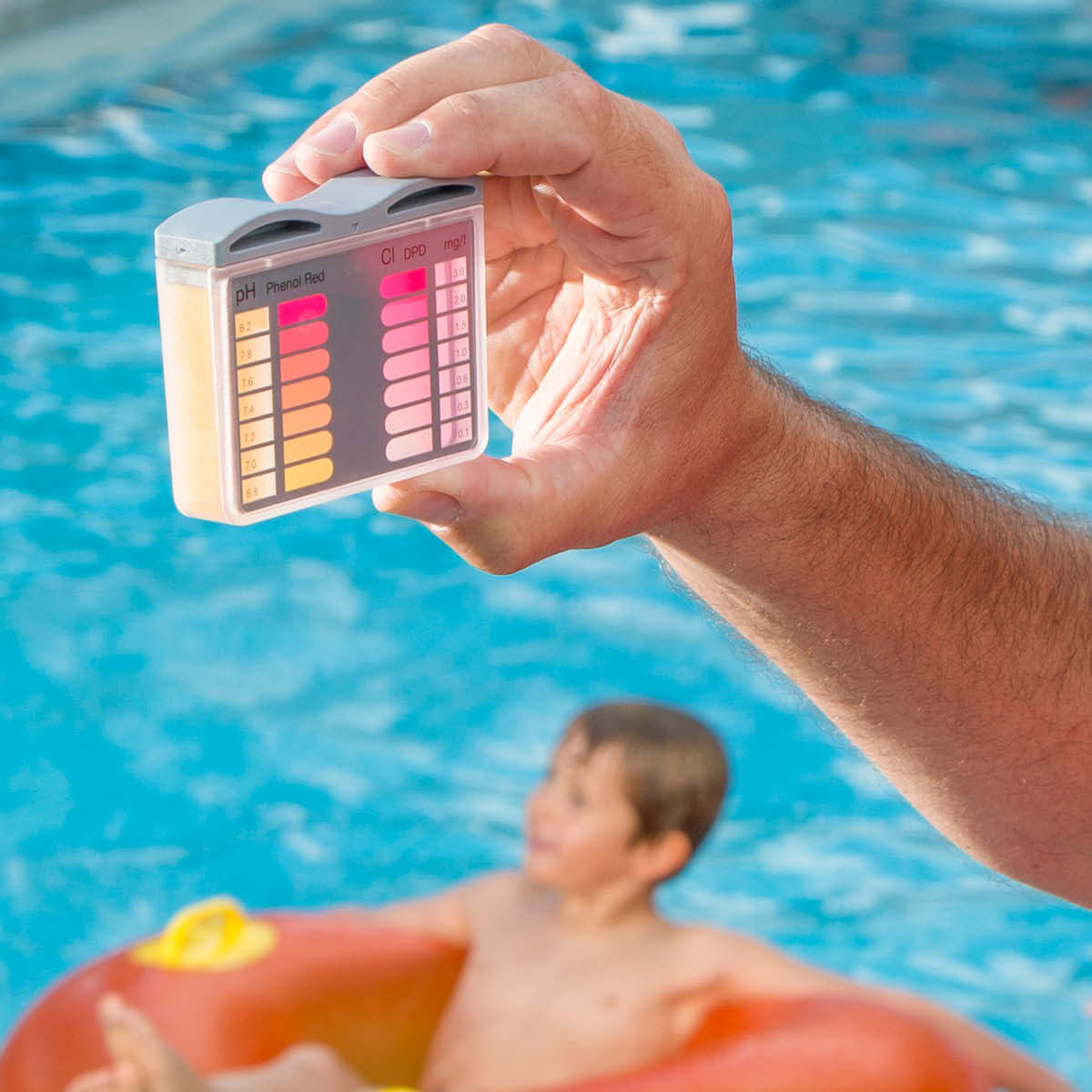
Pool Testers - Fast, Accurate, and Easy to Use
The tester combines rapid-dissolving RAPID tablets with simultaneous measurement of water treatment agents and pH, delivering highly accurate results you can trust. Its intuitive design makes operation simple and straightforward, with clear instructions to guide you whenever needed. The ergonomically optimized lid ensures a secure grip for comfortable handling every time.
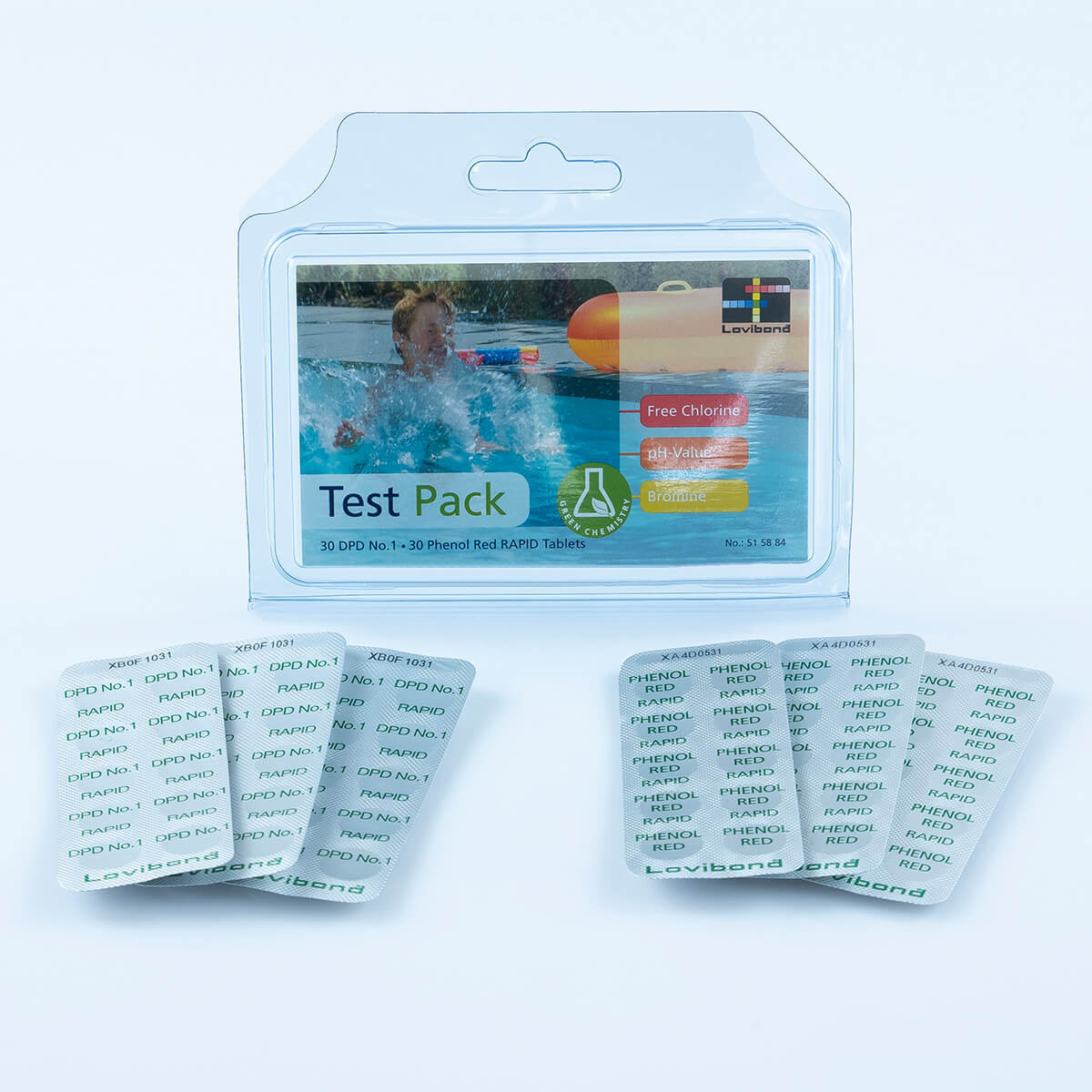
Tablet Refill Packs for Accurate Water Testing
Lovibond tablet refill packs are formulated to deliver fast-dissolving, highly accurate measurements you can rely on. Designed specifically for use with Lovibond testers and the Scuba3s, the tablets ensure consistent colour development for precise water quality analysis. Easy to handle and clearly labelled, they support quick testing, dependable results, and confident pool and spa water management.
